the knowledge spine
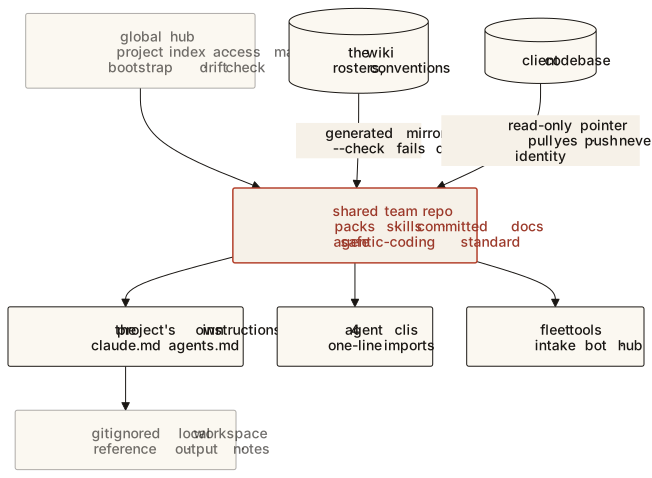
One version-controlled source of truth for ways-of-working — serving four agent CLIs, the production tools built on it, and now a layered context model from global hub to gitignored local.
team one internal system. pack contents are internal; the architecture is the story.
The shared skill-and-context system underneath the fleet: topic-organized markdown packs (the PO framework, agency ways of working, platform context, a glossary) plus installable skills for ticket operations — consumed identically by four different agent CLIs through one-line imports, and by production tools like the intake bot, which git-pulls and indexes it as its domain brain. The discipline that makes it work: do the real work first, then distill it — tickets became the ticketing skill, one migration became the migration guide, an auth build became the auth blueprint, the rotation saga became a chapter.
Since June it matured into a layered context model: a global hub (project index, access map, a bootstrap guide, a drift-detecting sync script) → the team repo → each project's own instructions → a gitignored local workspace for personal reference and output. Three decisions worth stealing. The safe agentic-coding standard — sandbox only, never vibe-code straight into the production monorepo, no standing write access to shared repos, a two-zone blast-radius table — lives in the repo as always-on context for the agent itself, and was published to the wiki from the repo as source of truth, not the other way around. Source-of-truth mirrors are generated, not hand-edited: a script regenerates the scrum-roster pack from the wiki with a --check mode that fails on drift. And the client codebase is wired in as a read-only pointer under a separate identity — pull yes, push never — so a ticket can name the real component and the agent can never touch production.
Full case study in progress — artifacts pending clearance or writing time. The insight below is already earned.
Skills route; packs hold the truth. One maintained source of knowledge serving every agent beats four copies quietly drifting apart — and the agent's own safety rules belong in that same source, not in a policy PDF nobody loads.
the insight