Lexus & Toyota build & price
Two brands, one aging configurator, and an asset pipeline that topped out in the hundreds.
built for lexus & toyota at team one (publicis groupe). metrics shown are public: the jd power award and platform traffic. internal architecture detail is sanitized.
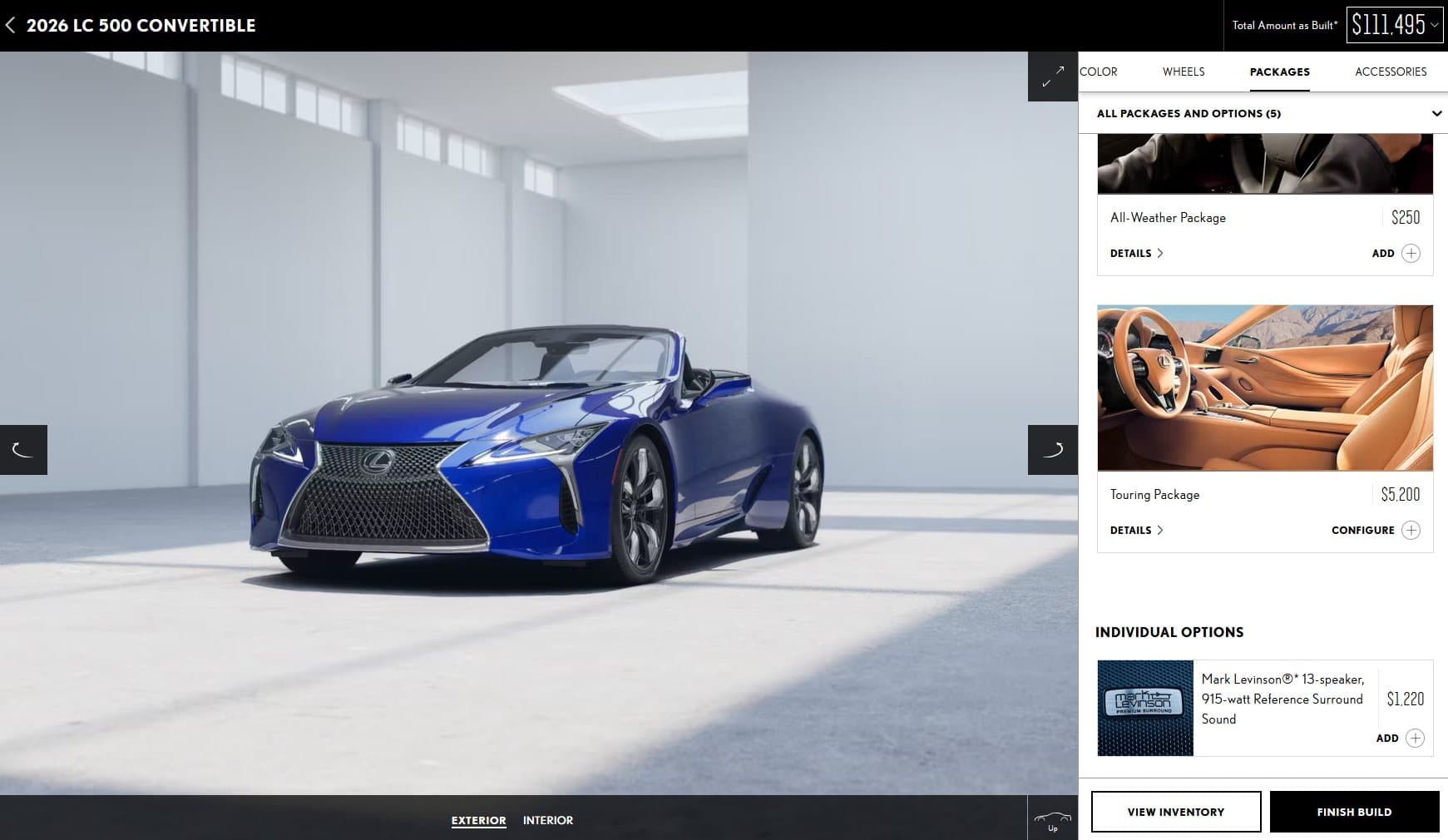
An enterprise vehicle configurator serving two brands, aging in place. Fragmented architecture underneath, and a creative asset pipeline that produced imagery in the hundreds per vehicle when the merchandising reality needed orders of magnitude more. I came in as the first agency-side product owner — a role that did not exist at Team One before this program.
The quiet problem under the visible one: agencies ship campaigns. Nobody on either side had ever asked an agency to own a platform.
Everyone framed it as a rebuild project — new frontend, fresher visuals, ship it. The actual problem was structural: without product governance, any rebuild would age exactly the way the last one did. So the rebuild became the occasion to install the operating model — backlog discipline, decision lanes, a roadmap that outlived the launch. The deliverable was the platform and the way it gets governed.
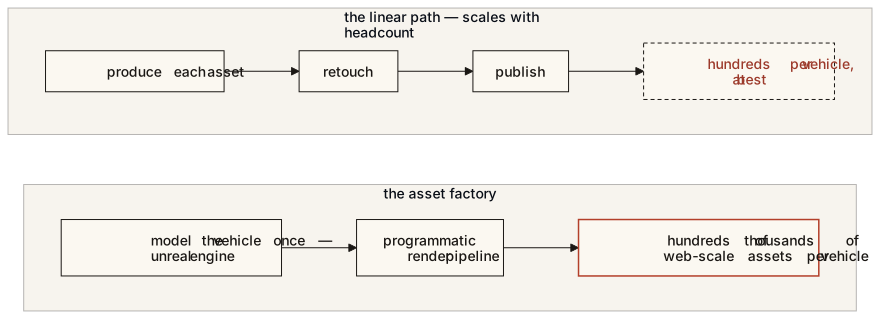
The interesting route was the asset pipeline. Configurators live or die on imagery — every trim, color, wheel, interior, angle, multiplied out. The conventional answer is “render more, hire more, budget more,” which scales linearly and breaks. The route taken: rebuild the creative pipeline around an Unreal Engine rendering workflow — model the vehicle once, render at web scale programmatically. Unreal stops being a game engine and becomes an asset factory.
The second route was cross-brand: instead of Lexus and Toyota maintaining parallel infrastructures, design shared infrastructure both brands inherit — one architecture, two skins, synchronized data.
End to end: backend services, enterprise architecture, data pipeline restructuring, frontend experience, and cross-brand synchronization. The centerpiece is the Unreal-based rendering pipeline pointed at the web — the part that turned asset volume from the binding constraint into a render queue.
Asset scalability went from hundreds to hundreds of thousands of assets per vehicle. Build & Price serves ~700K monthly users inside a Lexus.com ecosystem of ~7–8M monthly. And JD Power named it best in class vehicle configurator across all OEMs — not just the luxury segment.
The outcome I care about as much as the award: it proved an agency can operate with product governance. Own platforms, not just campaigns.
Unreal Engine isn't a game engine in this system — it's an asset factory. Point a rendering pipeline at the web and the cost of the next hundred thousand images stops being the constraint.
the insightpart of the practice — product ownership at platform scale.